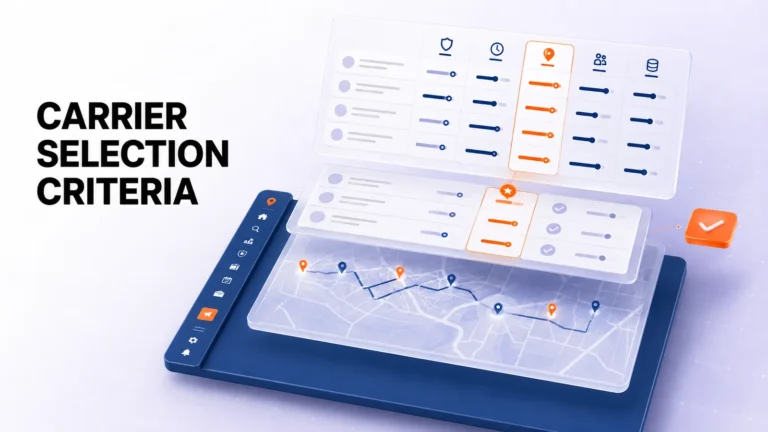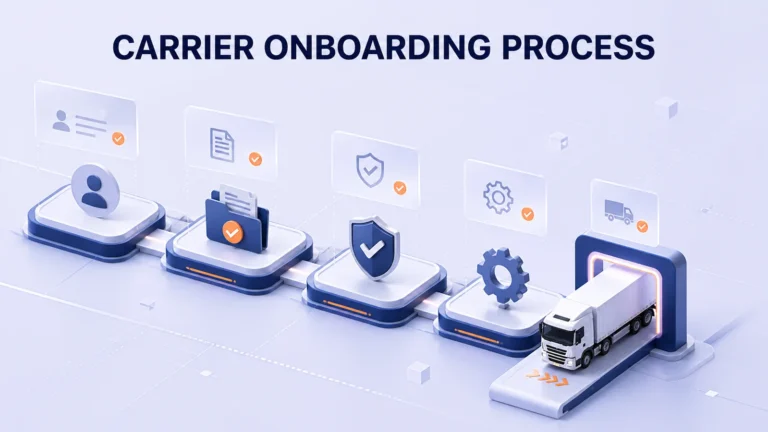
A carrier onboarding process turns an approved transportation provider into a carrier that operations can safely and consistently assign work to. It begins after the carrier passes the initial selection decision and ends when the carrier has cleared the required checks, accepted the operating rules, been configured in the necessary systems, and completed a controlled first shipment.
The key word is “controlled.” Collecting a packet is not enough if dispatch cannot tender the shipment, the warehouse does not know the pickup procedure, finance lacks approved payment data, or customer service has no escalation contact. Effective onboarding produces one usable operating record and a clear go/no-go decision—not a folder of disconnected documents.
What the Carrier Onboarding Process Must Produce
The output should be a carrier profile that answers four questions: Who is the carrier? What work is it approved to perform? Which rules and evidence apply? Who can release the first shipment? This keeps onboarding distinct from carrier selection criteria, which determine whether a provider should receive an award.
It also separates initial setup from ongoing governance. Expiry monitoring, periodic rechecks, and recurring compliance reviews continue after launch. The broader carrier management process connects those later controls to allocation, execution evidence, performance review, and corrective action.
A complete onboarding record normally includes an approved scope, validated identifiers and documents, agreed commercial and operating terms, system configuration, named contacts, a readiness decision, and the first shipment review result. The exact record varies by carrier type, cargo, geography, and jurisdiction.
Confirm the Award Scope Before Collecting Documents
Start by translating the selection decision into a precise approval scope. A carrier may be suitable for one region, equipment type, service level, or customer program without being approved for every shipment. If the scope is unclear, the system may show an “active” carrier while operators still have to guess when that carrier can be used.
Record the approved lanes or service area, shipment types, equipment and handling constraints, service windows, exclusions, and customer-specific conditions. Assign one onboarding owner, then identify who approves risk, commercial terms, payment setup, system access, and release.
Ready to proceed when: the team can state exactly which shipments the carrier may receive and who owns each approval. Stop and resolve when: the award is still described as “use when needed” or mandatory conditions have no owner.
How the Carrier Onboarding Process Works Step by Step
The sequence below can be adapted for a shipper, broker, 3PL, courier network, or enterprise delivery team. The controls should match the operation; a parcel provider integration and a regional truckload carrier will not require identical setup.
- Open one controlled intake record. Create a carrier record with a unique identifier, legal and operating names, business address, approved contacts, carrier type, and award scope. Record the request date, owner, status, missing items, and approval history. Avoid competing versions in email, spreadsheets, and finance systems.
- Collect required business and payment information. Request only what the relationship and jurisdiction require. For a U.S. payee, the IRS explains that Form W-9 provides the correct taxpayer identification number to the requester. Treat tax and banking data as sensitive: restrict access, use an approved transfer method, and independently confirm payment changes.
- Verify identity, authority, insurance, and risk conditions. An uploaded document is not verification by itself. Compare the legal name, address, identifiers, contacts, and payment details across independent sources. In the United States, the FMCSA explains which interstate operations generally require operating authority. It also says insurance requirements vary by entity, authority, cargo, and vehicle type; use current insurance filing requirements as a regulator source, not legal or insurance advice.
- Finalize the agreement and operating rules. Confirm the executed agreement, approved rate or rate mechanism, accessorial process, invoicing requirements, claims path, cancellation terms, and dispute contacts. Then document the operational rules: tender channel, response deadline, pickup procedure, appointment handling, required shipment events, exception escalation, delivery evidence, and after hours coverage.
- Configure the carrier in connected systems. Create the profile used by operations, finance, customer service, and reporting. Map identifiers, define approved services, establish access, and confirm how tenders, events, documents, and invoice data move. For an integration, document its owner, direction, supported data, failure alert, and fallback. Use the It’s Here integrations page as a commercial evaluation point, then verify each required connection and data flow.
- Run a readiness review. Have each owner confirm completion with evidence rather than a verbal “done.” Risk confirms the required checks; procurement or leadership confirms commercial approval; finance confirms supplier and payment setup; operations confirms contacts and rules; the system owner confirms configuration and access. Record unresolved exceptions and the person authorized to accept them.
- Release a controlled first shipment. Choose a representative shipment that is important enough to test the real workflow but not unusually complex. Brief the warehouse and service teams, identify the monitoring owner, and review tender acceptance, pickup communication, status events, exception handling, completion evidence, and invoice data. A passed packet does not prove that the handoffs work; the first shipment does.
Turn Expectations Into Operating Rules
An onboarding checklist is most useful when every item changes a decision or prepares a handoff. “Good communication” is not a usable rule. “Escalate a missed pickup confirmation to the operations lead within the agreed window through the named channel” tells the carrier and the internal team what to do.
Use this practical rule checklist before launch:
- Define the tender channel and the response that counts as acceptance.
- Name primary, backup, after hours, claims, and billing contacts.
- Document pickup, appointment, loading, and handoff procedures.
- Specify required status events and the source of each event.
- Define what counts as an exception and who receives the first alert.
- State the completion evidence required for the shipment type.
- Confirm invoice fields, supporting documents, and dispute routing.
- Record the fallback when a portal, integration, or data feed is unavailable.
These rules should align with the carrier’s approved role in the network. A team that needs to step back and define carrier eligibility, assignment, and review can use the complete carrier management in logistics guide before adding more setup detail.
Decide Whether a Carrier Is Ready for the First Shipment
The carrier onboarding process needs an explicit readiness decision. An incomplete item can be harmless, conditional, or disqualifying depending on the shipment. The next action must change with the answer.

Is every mandatory identity, authority, insurance, and agreement requirement verified for the approved scope?
- Yes → continue to operational and system readiness.
- No → do not release the shipment; obtain or independently verify the missing evidence.
Can operations execute the tender, pickup, exception, and completion workflow without inventing a step?
- Yes → continue to the controlled first shipment.
- No → assign the missing rule, contact, access, or configuration to an owner and retest it.
Is an unresolved item explicitly accepted by an authorized owner with a limit and review date?
- Yes → record the exception and apply the stated restriction.
- No → keep the carrier in a pending state rather than converting uncertainty into an informal approval.
Use the First Shipment as an Operational Test
Example scenario (illustrative): A regional carrier is approved for scheduled pallet deliveries in one service area. Its documents and agreement are complete, but the first tender reveals that dispatch has one acceptance email while the carrier’s after-hours team monitors another address. The shipment is not yet late, but the handoff has already failed.
The practical response is to pause expansion, confirm the monitored channel, update the record, resend the tender, and verify the same acceptance status. After delivery, review timestamps, exception contacts, completion evidence, and invoice fields. Onboarding exposed a process gap before the carrier received more volume.
Create a short baseline from the first shipment: tender response, pickup confirmation, required event completeness, exception response, delivery completion, evidence quality, and invoice accuracy. Do not turn one shipment into a permanent performance rating. Use it to identify setup defects and decide whether the carrier is ready for the approved scope, needs a restricted second test, or must return to pending.
Keep Setup Separate From Ongoing Compliance and Performance
The carrier onboarding process has an end point, but carrier control does not. After launch, assign owners and dates for document expiry, authority or insurance rechecks, performance reviews, access reviews, and changes to contact or payment information. Those controls belong to ongoing compliance and carrier performance management rather than being hidden inside an endless onboarding task.
This boundary matters operationally. If onboarding never closes, no one knows whether the carrier is active. If compliance is treated as “already checked,” time-sensitive evidence can become stale. Close the setup record with a decision, then create the appropriate future controls.
Where Carrier Management Software Fits
Software can centralize carrier profiles, documents, workflow status, operating rules, contacts, approvals, and execution data. It should reduce duplicate entry and make missing evidence visible, but the team still has to define the approval criteria, verify sensitive information through authoritative sources, and decide who may accept an exception.
When evaluating carrier management software, test the actual onboarding record and first-shipment handoff. Confirm the fields, approval states, access controls, integrations, audit history, and fallback process with representative data. Do not assume that a feature label means the system verifies authority, insurance, identity, or compliance on your behalf.
Teams comparing the wider delivery-management context can also begin at the It’s Here homepage, then verify every required workflow and capability against their own onboarding scope.
Start the carrier onboarding process with one carrier, one approved scope, one controlled record, and one first shipment review. Once that chain works, standardize it without turning speed into skipped evidence.
FAQ
What Is a Carrier Onboarding Process?
It is the controlled workflow that moves an approved carrier from qualification through document and risk checks, agreement, operating-rule setup, system configuration, readiness approval, and a first shipment.
What Should a Carrier Onboarding Checklist Include?
It should include the approved scope, legal and contact data, required authority and insurance evidence, tax and payment setup, executed terms, operating rules, system access, integration checks, readiness approvals, and first-shipment review.
How Is Carrier Onboarding Different From Carrier Qualification?
Qualification decides whether a carrier is suitable for defined work. Onboarding converts that decision into an executable relationship. It collects and verifies evidence, records terms, configures systems, and prepares operations for shipment release.
When Is a Carrier Ready for Its First Shipment?
A carrier is ready when all mandatory requirements for the approved scope are verified, the operating and system handoffs have been tested, unresolved exceptions are formally controlled, and an authorized owner approves release.
Does Onboarding Software Verify Carrier Compliance Automatically?
Not necessarily. Capabilities vary by product, data source, carrier type, and jurisdiction. Confirm exactly what a system collects, validates, monitors, and records, and which checks still require human review or an authoritative regulator source.