The 6 AM dispatch board doesn’t lie. One column shows forty-two standard parcel stops, neatly sequenced, thirty minutes apart. The other shows fourteen furniture deliveries, each flagged with a two-hour window, a two-person crew requirement, and a note that reads “customer must be present.” Two columns. Two entirely different operational realities. And one routing software that was designed, very clearly, for the first column.
This is the problem nobody warns you about when you’re evaluating courier delivery platforms. Most software demos assume your delivery mix is relatively uniform: standard goods, standard vans, standard stops. The moment your operation includes bulky items alongside standard freight, you’ve introduced a category of complexity that requires the best courier delivery software for bulky items—otherwise, the majority of platforms handle it poorly, quietly, and often invisibly until the day a crew shows up with a 300-pound refrigerator.
Choosing a provider in this environment isn’t about finding the app with the best interface or the vendor with the most aggressive pricing. It’s about understanding exactly where your operation breaks down, and finding a platform whose architecture was built around those specific failure points, not retrofitted to handle them after the fact. That distinction, between a platform adapted for bulky delivery and one designed around it, is what this guide is fundamentally about.
What Is a Courier Delivery Software Provider, Really?
Before you can evaluate providers meaningfully, you need a working definition that goes beyond the marketing copy. Most vendors describe themselves as “end-to-end last-mile platforms,” which tells you almost nothing. A better framing: a courier delivery software provider is a company selling you an operational decision engine, a system that will make thousands of routing, dispatch, and communication decisions on your behalf, automatically, every single day.
That’s a different frame than “software tool,” and it changes how you should evaluate. A tool you can swap. An operational decision engine that’s woven into your dispatch workflows, connected to your ERP, and responsible for the ETAs your customers are receiving, that’s something you should evaluate with the same care you’d use to hire a senior operations hire. Because in terms of daily impact on your margins, that’s roughly what it is.
If you want to understand the broader landscape of what these platforms actually do before comparing providers, it’s worth starting with a thorough read of the complete guide to what delivery management software is, which covers the full scope of the category in practical terms. This article builds on that foundation by focusing specifically on the provider-selection layer: how to evaluate vendors, what to demand from a demo, and why your product mix, especially if it includes heavy or bulky freight, should drive the entire framework.
The Bulky Item Problem: Why Standard Courier Software Falls Short
Let’s be precise about what “bulky items” actually means in an operational context, because vagueness here is expensive.
Large bulky item courier delivery software is a category of last-mile execution platform built for the delivery of oversized, heavyweight, or high-service-cost goods. It includes furniture, appliances, fitness equipment, and palletized B2B freight. What separates this category from standard parcel delivery isn’t just the size of the box. It’s the structure of the delivery event itself.
A standard parcel stop takes two to five minutes. A driver pulls up, scans, drops, leaves. A bulky item stop might take forty-five minutes. It might require a crew of two, specific vehicle equipment, a confirmed appointment window, a customer present to sign, room-of-choice placement, and before-and-after photo documentation for damage liability. This operational reality is exactly why generic tracking tools fail, and why finding the best courier delivery software for bulky items becomes an absolute necessity for protecting your margins.
Generic courier software treats both of these stops as equivalent in the routing model. They’re not. A platform that builds a route without accounting for the fact that Stop 7 is a 300-pound appliance requiring a staircase carry, and that the stop after it has a hard 2 PM window that can’t slip, isn’t optimizing your operation. It’s generating a plan that will fail predictably, stop after stop, while your dispatchers spend the morning firefighting the consequences.
The Hybrid Operation Problem
What makes this even more nuanced is that most real-world operations don’t deliver exclusively bulky items. They deliver a mix. A 3PL might run fifty routes on a given day, with thirty parcel routes, fifteen mixed-freight routes, and five dedicated heavy-goods routes requiring two-person crews. A regional distributor might deliver appliances Monday through Wednesday and furniture Thursday through Friday, with different vehicle types, crew requirements, and documentation needs for each.
This hybrid reality is where most software evaluations go wrong. Operators test a platform against their standard parcel workflow, find it adequate, and assume it will handle the bulky items too. However, securing the best courier delivery software for bulky items means avoiding this assumption entirely. Without specialized architecture, you discover that the heavy goods are being handled by manual workarounds your dispatchers developed quietly to compensate for what the software can’t actually do automatically.
The right question to ask any vendor isn’t “can your platform handle bulky items?” The right question is: does your routing engine model bulky-item constraints natively, or do your dispatchers have to manually override the system’s suggestions to make those deliveries work? The answer to that question tells you everything about whether the platform is designed for your operation or adapted for it.
The Five Dimensions of Provider Evaluation
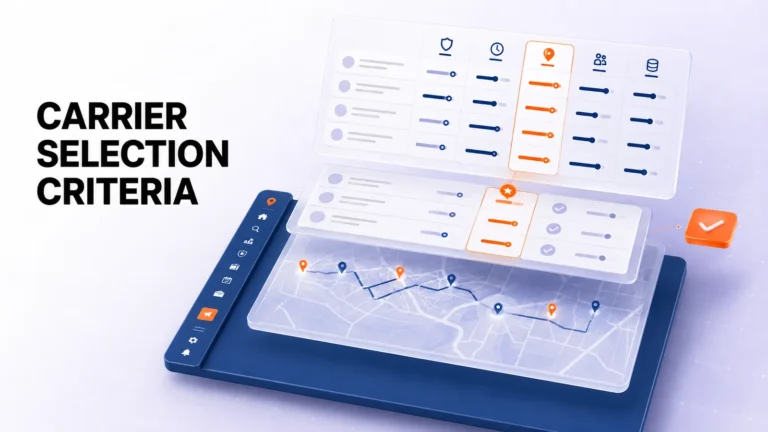
Choosing the best courier delivery software for bulky items isn’t a feature-checklist exercise. It’s a framework exercise. These five dimensions, applied consistently across every vendor you evaluate, will give you a clearer picture than any demo or sales conversation.
1. Constraint Modeling Depth
Route optimization is the headline feature on every platform’s homepage. But route optimization quality isn’t binary; it varies enormously in what constraints the engine can model and how many it can hold simultaneously.
For standard parcel operations, the relevant constraints are relatively simple: distance, time windows, vehicle capacity by weight or count. Standard courier software optimizes stop sequences. On the other hand, the best courier delivery software for bulky items manages the complex constraints that determine whether those large-scale stops can be completed at all.
The additional constraints that bulky-item operations require the routing engine to model natively include vehicle capacity by cubic dimension (not just weight), equipment requirements at the vehicle level (lift gate, appliance dolly), two-person crew assignment and scheduling, room-of-choice or white-glove service flags that extend stop duration, and customer-confirmed appointment windows that carry real financial penalties if missed.
When evaluating vendors, ask them to demonstrate route building with a scenario that includes all of these constraints simultaneously, not a clean demo with standard stops. If the demo team pauses, says they’ll “follow up on that,” or suggests those constraints would be handled by manual dispatcher override, you have your answer.
2. Proof of Delivery Architecture
For standard deliveries, proof of delivery is a checkbox: signature, photo, timestamp. For high-value bulky items, it’s a liability management system. False damage claims drop when you hold dated, geo-tagged photos of the unit at install. Delivery confirmation stays unambiguous. Real issues resolve faster. Customer trust compounds when a clean photo inside the follow-up email turns every install into proof.
What this means in practical terms is that your ePOD system needs to support structured documentation: a photo of the item before entry, a photo of placement, an assembly confirmation if applicable, and a timestamped, geo-verified signature. The best courier delivery software for bulky items doesn’t just capture proof. It structures that proof in a way that’s immediately useful for dispute resolution, insurance documentation, and client billing.
A driver mobile app with good ePOD capture is the difference between resolving a damage dispute in three minutes and spending forty-five minutes reconstructing an event that happened three weeks ago with no documentation. It’s worth asking every vendor to show you the ePOD flow from the driver’s perspective, specifically for a scenario involving room-of-choice placement and a customer dispute.
3. Appointment Scheduling Integration
Bulky items almost always require confirmed delivery appointments. This creates a coordination challenge that generic dispatch software handles poorly: the gap between when an order is confirmed and when the appointment is actually locked in with the customer. Deploying the best courier delivery software for bulky items with a built-in automated delivery appointment scheduling system removes that gap entirely.
A platform with a built-in automated delivery appointment scheduling system removes that gap entirely. When an order enters the system, the customer automatically receives a scheduling link, selects from available windows (which the platform generates dynamically based on route density and crew availability in that zone), and confirms an appointment that immediately feeds back into the routing engine. No manual calls. No sticky notes on the dispatcher’s monitor. No appointment that was verbally confirmed by a sales rep but never made it into the routing tool.
The operational value here isn’t just efficiency, though the efficiency is real. It’s that appointment scheduling becomes a data loop rather than a one-way notification. When a customer reschedules, the system knows. When a window fills up, the next available option automatically adjusts. And when a driver is running behind schedule, the system can proactively notify the customer before they’re standing at their door waiting, which is exactly the scenario that produces bad reviews and customer service calls.
4. Warehouse and Back-Office Integration
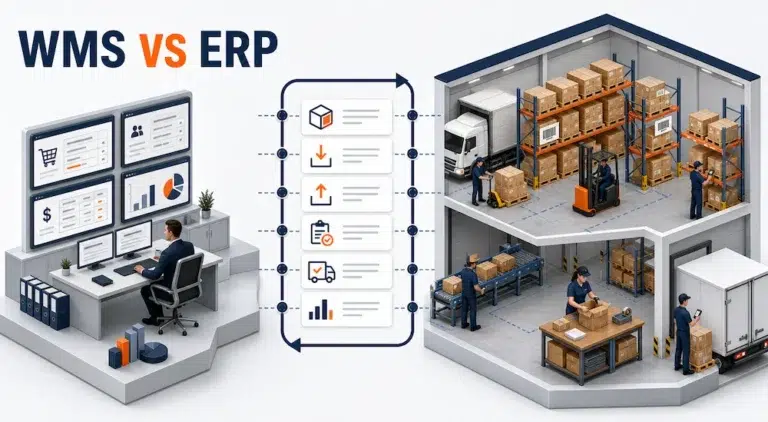
The single biggest differentiator for bulky operations is whether your transportation management and warehouse management live in the same system. If your TMS and WMS are separate, you’re creating data silos, manual handoffs, and visibility gaps.
This is a structural decision that has compounding consequences. A 3PL running bulky-item fulfillment out of a sorting facility needs to know, in real time, that the refrigerator assigned to Route 7 Stop 4 is actually staged and ready to load, not still in receiving. A routing engine that plans a route without live warehouse data is making assumptions that will sometimes be wrong, and when they’re wrong in the bulky-item world, the cost is a failed delivery, a crew standing at a dock with an empty truck, and a customer waiting at home.
When evaluating providers, look for platforms that either natively include sorting hub and warehouse management capabilities, or offer deep, real-time API integration with your existing WMS. If your platform depends on an SFTP file transfer or a nightly sync to keep routing and warehouse data aligned, that latency will bite you during your busiest days, which are exactly when the stakes are highest.
This is also where understanding your existing logistics management software integration architecture becomes critical. The best delivery software in isolation doesn’t help you if it creates new data gaps between your dispatch floor and your billing department.
5. Multi-Merchant and Multi-Client Configuration
If you’re a 3PL or a regional carrier managing deliveries on behalf of multiple clients, your software selection has an additional layer of complexity that single-fleet operators don’t face: you need a platform that can hold each client’s data, SLAs, and branding entirely separate from every other client’s, while still giving you a unified operational view across the whole portfolio.
This sounds like a basic capability. In practice, it rules out a significant portion of the market. Many platforms are built around a single-account model: one fleet, one set of rules, one client. Multi-tenant architecture, where each merchant gets their own portal, their own performance metrics, and their own branded tracking experience, while the operator manages everything from a master dashboard, is a genuinely different product.
For 3PLs specifically, the ability to offer each client white-labeled tracking and their own login visibility is a commercial differentiator, not just an operational nicety. Clients who can see their own delivery performance in real time, without calling your dispatch team to ask, are clients who renew their contracts without much deliberation. Multi-merchant management done well is a retention tool, not just an operations tool.
What to Actually Test During a Demo
Most software demos are controlled performances. The vendor shows you the happy path: a clean order, a smooth dispatch, a perfectly captured proof of delivery. What you actually need to see is the unhappy path, the scenario that’s closest to your worst Tuesday.
Build your own demo script before the call. For bulky-item operations, that script should include at minimum: a route with mixed parcel and heavy-freight stops, a same-day reschedule from a customer mid-route, a driver flagging an access issue at a stop (locked gate, no elevator), and a dispatcher reassigning that stop to a different crew without breaking the rest of the route’s time commitments. How a platform handles these exceptions, not how it handles a clean day, is the most reliable predictor of how it will perform for your operation at scale.
Ask the vendor to show you the driver-facing app for each of these scenarios, not just the dispatcher dashboard. The driver app is where your operational plan either survives contact with reality or falls apart, and it’s the part of the product that gets the least demo time because it requires the most live improvisation from the sales team.
Evaluating the Best Courier Delivery Software in 2026: A Quick Market Read
Armstrong & Associates estimates the U.S. 3PL big and bulky last-mile delivery market has been growing at 11.4% CAGR since 2017, with projections of 7.2% CAGR through 2026. According to the Armstrong & Associates Market Analysis, that growth rate means the software market has gotten considerably more crowded, and the marketing language has gotten considerably less precise. Everyone claims to handle heavy freight, but finding the best courier delivery software for bulky items requires looking past marketing language to evaluate how constraints interact natively.
The honest market segmentation looks roughly like this. Platforms built for enterprise-scale bulky operations prioritize TMS-WMS unification and deep carrier orchestration, but carry significant implementation overhead and price points designed for large distribution networks. Mid-market platforms designed for regional operations offer better configurability per dollar but sometimes treat bulky-item constraints as add-on modules rather than core architecture. And routing-focused tools that started in the parcel space have added bulky-item capabilities that work adequately for simpler operations but struggle when your crew assignment, vehicle matching, and appointment logic all need to interact simultaneously.
When evaluating what the best courier delivery software 2026 looks like for your specific context, the relevant comparison isn’t “which platform has the best overall review score.” It’s “which platform’s core architecture was designed around the specific constraints my operation faces, and which one adapted to handle them after the fact.”
The It’s Here Approach: Built for Operational Complexity
When evaluating platforms for mixed-freight, multi-client, or bulky-item operations, the architecture decisions matter more than the feature list. It’s Here is built as a unified system, combining delivery management, route optimization, multi-merchant management, automated appointment scheduling, driver mobile app, and sorting hub WMS under one roof, so that the data flowing between those layers is live, not batched, and doesn’t require human intervention to stay synchronized.
The driver mobile app includes structured proof of delivery capture designed for complex delivery events, not just package drops. The automated delivery appointment scheduler creates dynamic windows based on actual route density and crew availability, feeding confirmed appointments directly back into the routing engine. And the multi-merchant architecture allows 3PLs to run each client’s operation with full data separation while maintaining a master dispatch view across the entire portfolio.
None of this is a sales pitch in isolation. It’s an architectural description of the decisions we made when building the platform, because operations managers evaluating delivery management software deserve to understand not just what a platform does, but why it was built the way it was. If the way It’s Here thinks about these problems matches the way you’ve been thinking about yours, that’s probably worth a closer look.
The Cascading Effect: From Delivery Execution to Back-Office Performance
Here’s the part of the provider evaluation conversation that rarely comes up in a demo, but that determines whether a software investment actually improves your margins or just changes which manual workarounds your team is running.
When a driver completes a bulky-item delivery, captures structured proof (photos, signature, geo-stamp), and marks the stop complete in real time, a chain reaction happens in the back office. The delivery status flows immediately to your merchant’s portal. The billing event is triggered without anyone in accounting manually cross-referencing a paper manifest. The customer receives an automated confirmation with the proof attached. And your operations dashboard updates with one more completed stop toward the day’s on-time rate.
When that chain doesn’t happen automatically, because the delivery app and the billing system aren’t connected in real time, because the proof of delivery sits on a driver’s phone until they return to the depot, because the merchant portal shows “in transit” until someone manually updates it, what you get instead is: a billing cycle that runs twenty-four hours behind, a customer service team fielding calls from merchants whose clients are asking about their deliveries, and an accounting team chasing dispatchers for paperwork at the end of every week.
This is the business case for choosing the right provider. It’s not about the routing algorithm in isolation. It’s about whether the platform creates a connected data loop from the moment a driver marks a delivery complete to the moment your invoice goes out, your customer receives confirmation, and your operations report reflects reality. That loop is where the ROI of this software decision actually shows up, and it’s the question worth keeping at the center of every provider evaluation conversation.
Conclusion: The Framework Is the Differentiator
The best courier delivery software for bulky items isn’t determined by which vendor has the most features or the most visible brand in your inbox. It’s determined by how closely a platform’s architecture matches the specific constraints your operation faces, and by whether the vendor’s demo is honest enough to show you the hard scenarios, not just the clean ones.
Start your evaluation with your own operational reality: your mix of parcel and bulky stops, your crew assignment requirements, your appointment commitments, your integration dependencies. Then use that reality as the test against which you evaluate every platform, not the other way around. The providers worth shortlisting are the ones who, when you describe your worst Tuesday, don’t pause and suggest a workaround. They describe how the system handles it automatically.
If you’re starting that evaluation and want to understand how modern logistics platforms approach these architectural questions, It’s Here is worth exploring at https://itshere.com/.
FAQ
What is the best courier delivery software for bulky items in 2026?
There’s no single “best” answer because the right platform depends on your operational complexity. For hybrid operations handling both standard parcels and bulky freight, look for platforms that model weight, cubic dimensions, crew assignments, and appointment windows as native routing constraints, not manual overrides. Platforms built around TMS-WMS unification perform better in this category than pure routing tools that added bulky capabilities as an afterthought.
How is courier delivery software different from standard delivery management software?
Courier delivery software tends to prioritize dispatch speed, driver tracking, and client billing for third-party delivery services. Delivery management software is a broader category that also includes route optimization, customer experience tools, and warehouse integration. For operations handling bulky or oversized items, the distinction matters less than whether the platform’s routing engine models your specific delivery constraints natively.
What features should I look for in the best courier delivery software solutions for a 3PL handling multiple clients?
For 3PLs, multi-tenant architecture is non-negotiable: each client needs data separation, their own branded tracking experience, and their own performance visibility. Beyond that, look for automated appointment scheduling that feeds back into routing, a driver app with structured ePOD capture, real-time back-office integration (so delivery events trigger billing events automatically), and an open API that connects to your existing WMS and ERP without requiring custom development.
How do I evaluate courier delivery software providers for bulky item delivery?
Build your own demo scenario before any vendor call. The scenario should include mixed parcel and heavy-freight stops, a same-day reschedule mid-route, a driver flagging an access issue, and a reassignment to a different crew. The best courier delivery software for bulky items will handle these exceptions naturally. How a platform handles your unique operational exceptions is more predictive of its fit than how it performs on a clean, pre-packaged demo.
Does courier delivery software integrate with warehouse management systems?
Most modern platforms offer API integrations with external WMS tools, but integration depth varies significantly. Some platforms offer native WMS capabilities built into the same system, which eliminates the latency and data-sync issues that come from connecting two separate platforms. For bulky-item operations specifically, real-time warehouse data (is this item actually staged and ready to load?) directly affects routing reliability, making WMS integration a core evaluation criterion rather than a nice-to-have.