The morning rush at a last-mile distribution depot feels less like managed logistics and more like a high-stakes puzzle where the pieces keep changing shape. It is 5:45 AM, and your dispatch board is already a sea of conflicting realities. Three drivers failed to show up for their shift, a sudden highway closure has bottlenecked your primary transit corridor, and an enterprise B2B customer just sent an urgent order modification for a delivery scheduled in two hours. If your dispatchers are currently forced to handle this chaos by juggling legacy spreadsheets, three separate browser tabs, and frantic WhatsApp groups, your technology stack isn’t helping your business scale—it is actively capping your daily revenue.
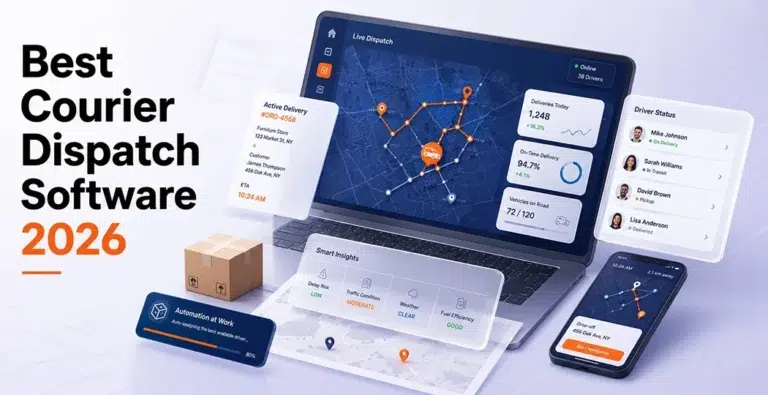
When your delivery infrastructure relies on fragmented systems, operational friction doesn’t just stay on the dispatch floor. It cascades through your entire business, turning into missing proof-of-delivery (POD) documents, delayed billing cycles, and an overworked customer service team handling a never-ending flood of “Where is my order?” (WISMO) calls. Resolving these deep inefficiencies requires moving past manual oversight and adopting the best courier dispatch software engineered to transform chaotic logistics into a highly predictable, margin-generating engine.
Beyond the Checklist: What Makes True Enterprise Dispatch Infrastructure?
When operations managers begin evaluating software options, they often fall into the trap of feature-counting. They build large matrices comparing vendors based on simple checkboxes: Does it have an app? Does it map routes? Does it send text notifications? The problem with this approach is that almost every basic tool on the market can check those surface-level boxes. The real operational difference between a standard dispatch tool and the best courier dispatch software solutions doesn’t live in whether a feature exists; it lives in how that feature handles the messy, unpredictable reality of a live delivery day.
A highly resilient dispatch environment treats software not as an isolated tool for your drivers, but as an operational decision engine that ties your entire business together. This requires looking past the standard marketing demonstrations to evaluate the underlying system architecture. True enterprise infrastructure must naturally unify your dispatch floor, your mobile fleet, and your back-office billing processes into a single, real-time data loop.
According to comprehensive supply chain analysis by the Council of Supply Chain Management Professionals (CSCMP), final-mile operations that replace manual data transfers with unified, real-time data layers see an average reduction of 22% in administrative overhead alongside significantly improved fleet asset utilization. When evaluating the market’s top dispatch software, you are ultimately looking for an integrated system that eliminates manual workarounds, automates exception handling, and scales effortlessly alongside your multi-client or multi-merchant portfolio.
Crucial Evaluation Criteria for Modern Courier Fleets
To make an objective, dispatcher-ready comparison of the top platforms available in 2026, we must look at the specific technical layers that prevent operational failure. An elite courier platform must be measured across five core dimensions:
1. Architectural Integration Depth
A standalone dispatch system that requires manual CSV uploads or nightly file transfers creates immediate data silos. Elite platforms rely on robust API webhooks for TMS/WMS sync to ensure that your order fulfillment, route planning, and inventory tracking operate as a singular unit. If your dispatchers have to manually verify whether an item is staged at the sorting hub before assigning a route, the software is stealing valuable time from your operation.
2. Live Driver Workflow Resilience
The performance of your logistics network ultimately depends on the software your drivers use on the road. If a mobile application drains device batteries, crashes in areas with poor cellular service, or features a clunky user experience, drivers will abandon it for manual workarounds. The market’s best courier dispatch software prioritizes a highly responsive, offline-first mobile app that handles complex data collection naturally.
3. Automated Route Adaptation
Static route planning involves sequencing a set of drops at 6:00 AM and assuming the day will unfold perfectly. But real-world logistics requires a dynamic re-routing engine that can absorb real-time disruptions—such as a customer cancellation or a same-day order injection—and instantly recalculate the optimal sequence for the active fleet without requiring dispatcher intervention.
4. Back-Office Data Synchronization
A completed delivery shouldn’t just be an isolated event in a driver’s log. A modern delivery management software platform ensures that when a driver completes a drop, structured data immediately triggers automated billing events, updates merchant portals, and generates clean proof-of-delivery records for accounting.
5. Multi-Merchant Account Isolation
For third-party logistics (3PL) providers and regional carriers, managing multiple clients on a single dashboard is a recipe for error. True enterprise architecture requires multi-tenant data separation, allowing you to run unique operational rules, branded tracking experiences, and distinct service level agreements (SLAs) for each client under one master administrative view.
The 8 Best Courier Dispatch Software Platforms for 2026
The following comparison details how the leading logistics and courier platforms approach these critical operational dimensions, helping you identify the right fit for your specific fleet complexity.
1. It’s Here (itshere.com)
Designed explicitly for high-volume fleets, 3PLs, and mixed-freight operations that face intense real-world variables, It’s Here avoids the surface-level feature approach to deliver a completely unified architecture. Instead of patching together independent modules for dispatching, warehouse routing, and customer communication, the platform consolidates all final-mile data into a single operational stream.
- Core Architecture: A completely integrated ecosystem that connects frontline drivers directly to back-office billing networks via real-time data pipelines.
- Operational Strengths: Features a highly resilient live driver app with POD capture that simplifies onsite documentation (including geo-tagged photos, barcodes, and digital signatures) to eliminate liability disputes. Its native dynamic re-routing engine recalculates active schedules on the fly as real-world disruptions occur, while automated WISMO customer notifications proactively update consumers with precise, predictive ETAs to slash inbound call volume.
- Best For: Operations Managers and 3PL business owners who want to eliminate manual dispatch workarounds, protect their margins, and scale multi-merchant workflows within a single, unified interface.
2. Bringg
Bringg is an enterprise-grade delivery orchestration platform built primarily for large retailers and massive logistics networks with complex, multi-carrier requirements.
- Core Architecture: Heavy emphasis on carrier auto-dispatching and large-scale orchestration across internal fleets and third-party crowdsourced delivery networks.
- Operational Strengths: Powerful automated dispatch logic that allocates orders based on strict cost and proximity rules across hundreds of independent fleets simultaneously.
- Best For: Enterprise retail brands and nationwide logistics operators managing a massive volume of standard parcels across distributed regional networks.
3. Onfleet
Onfleet targets mid-market couriers, local delivery fleets, and specialized final-mile businesses that prioritize clean consumer interactions and a streamlined dispatch layout.
- Core Architecture: A visually focused dispatch dashboard paired with integrated text communication channels and clean predictive ETA modeling.
- Operational Strengths: Intuitively designed user interfaces that reduce dispatcher onboarding time, combined with reliable, simple driver communication pipelines.
- Best For: Regional delivery operations, pharmacy couriers, and high-end local delivery fleets focused on standard parcel profiles.
4. OptimoRoute
OptimoRoute focuses intensely on mathematical route optimization for businesses running complex driver schedules, varying shift patterns, and multi-day planning horizons.
- Core Architecture: A highly advanced algorithmic planning engine designed to maximize fleet utilization across long planning windows.
- Operational Strengths: Exceptional capabilities for modeling driver work hour constraints, mandatory breaks, and diverse vehicle capacity types during early-morning route planning batches.
- Best For: Field service fleets, regional distributors, and mid-sized courier teams with highly variable driver shift schedules.
5. Route4Me
Route4Me is a veteran in the routing space, offering a highly modular platform where fleets can purchase specific add-ons depending on their current size.
- Core Architecture: A flexible marketplace model that allows operations to start with basic route sequencing and add advanced features over time.
- Operational Strengths: Robust territory management, map-based zone creation, and highly customizable parameters for standard B2B routing schedules.
- Best For: Small to mid-sized courier operations looking for a highly customizable tool that can grow incrementally with their volume.
6. GetSwift
GetSwift offers a fast, transaction-focused dispatching tool tailored for companies that prioritize rapid delivery execution and automated driver assignment rules.
- Core Architecture: A real-time dispatch engine heavily centered around immediate order allocation and simple mobile tracking.
- Operational Strengths: Strong automated dispatch templates that broadcast incoming orders to the closest available on-duty driver based on a radius model.
- Best For: On-demand delivery services, food and beverage distributors, and immediate-fulfillment courier fleets.
7. DispatchScience
DispatchScience leverages artificial intelligence to automate the bidding, dispatching, and pricing processes specifically for on-demand couriers and traditional 3PL networks.
- Core Architecture: An algorithmic dispatch engine that automatically calculates complex shipping quotes, driver payouts, and route sequences simultaneously.
- Operational Strengths: Advanced capabilities for handling complex B2B courier contract pricing models, on-demand point-to-point dispatch variables, and algorithmic load balancing.
- Best For: On-demand courier companies, medical specimen transport fleets, and legacy 3PLs managing complex contractual pricing matrices.
8. Wise Systems
Wise Systems focuses heavily on real-time dispatch automation and dynamic scheduling for enterprise-level food, beverage, and field service operations.
- Core Architecture: Continuous optimization loops that monitor fleet positions and adjust delivery windows dynamically throughout the day.
- Operational Strengths: Strong predictive modeling for fleet arrival times, combined with automated dispatcher alerts when a route risks falling out of compliance.
- Best For: Large-scale commercial distributors and enterprise service fleets operating in volatile, highly congested urban markets.
The Cascading Back-Office Effects of Strategic Software
When evaluating the market’s best courier dispatch software solutions, it’s a mistake to calculate the return on investment (ROI) purely based on dispatch-floor metrics like fuel saved or minutes shaved off route planning. While those operational numbers are real, they only represent a fraction of the total business value. The true financial impact of modern software reveals itself in how frontline delivery events reshape your back-office efficiency.
Consider the traditional journey of a billing invoice. If your accounting department cannot issue an invoice until a driver physically returns a paper manifest to the warehouse, your cash conversion cycle is artificially bottlenecked by your legacy technology stack. A modern final-mile platform turns every delivery completion into an immediate, business-wide data event.
When your drivers utilize a resilient mobile application, the exact second they capture an electronic proof of delivery on a customer’s doorstep, that structured data syncs immediately with your central server. This automated verification loop allows your billing systems to generate and send accurate client invoices instantly—often before the driver has even driven away from the drop site. To understand how these technical layers build upon each other across an entire logistics framework, read through our comprehensive what is delivery management software guide.
Operational Realities: Moving From Reactive to Strategic
Legacy courier dispatch platforms force your operations team to spend their entire day in a highly reactive state. Dispatchers act as firefighting units, constantly responding to emergency phone calls, manually correcting route deviations, and tracking down missing drivers. This reactive loop leaves zero room for strategic planning or commercial growth.
Transitioning to an elite, automated decision engine changes your team’s entire analytical focus. Instead of asking “what went wrong over the last four hours,” your dispatchers can leverage predictive logistics to evaluate “what if” scenarios before they impact your margins.
Advanced systems constantly analyze real-time fleet density, historical warehouse staging latency, and traffic patterns to adjust operations silently in the background. If a specific delivery route begins lagging, the platform identifies the downstream impact, alerts the customer proactively, and balances the remaining loads automatically. This shift from manual monitoring to automated exception handling transforms your dispatch floor from a stressful cost center into a smooth, scalable competitive advantage.
For fleets that handle diversified delivery portfolios, it is also critical that your software naturally understands how varying product profiles impact your operational capacity. Managing a standard envelope drop requires a completely different logistical approach than handling oversized, high-value freight. If your operation includes mixed cargo profiles, you can explore our focused analysis on selecting the best courier delivery software for bulky items to see how specialized constraint modeling prevents delivery failures on the road.
The Definitive Testing Blueprint for Your Next Software Demo
Software sales demonstrations are carefully orchestrated performances. A vendor will typically load a set of clean, pre-arranged addresses, press a single button, and show you how a balanced route sequence appears on a flawless map. As an operations leader, your primary job during a vendor evaluation is to push the platform off this happy path and force it to face your absolute worst operational realities.
Before you attend your next sales call, build a strict, custom testing script based on the real-world complications that occur on your dispatch floor. Your custom script should require the sales engineer to demonstrate the following four live scenarios under pressure:
- The Mid-Route Fleet Disruption: A driver’s vehicle breaks down at 10:30 AM with twenty-five remaining stops. Force the vendor to show exactly how their platform splits those active stops across three other nearby drivers without violating those customers’ confirmed delivery windows or forcing a dispatcher to manually re-type addresses.
- The In-Transit Order Cancellation: A customer cancels an order while the delivery vehicle is already en route to their zone. Watch how the system handles the exception—does it remove the stop automatically, adjust the driver’s active sequence instantly, and send a live staging alert to your warehouse management system (WMS) for the return?
- The Total Cellular Dead Zone: Ask the sales engineer to show you the driver-facing application running on a mobile device with all network connectivity completely disabled. Force them to complete a full delivery workflow, including barcode scanning and structured proof-of-delivery capture, to verify that the app’s offline-first database caches data securely without dropping vital customer documentation.
- The Multi-Client Cargo Mix: Input a delivery batch containing twenty standard parcels alongside five high-value cargo items that require a specific vehicle liftgate and a two-person crew. Watch whether their optimization engine flags those vehicle constraints natively during the automated build, or if a dispatcher must manually intervene to prevent a delivery crew from showing up with the wrong equipment.
How a platform’s interface reacts to these real-world exceptions will tell you everything you need to know about how it will perform for your business at scale. If the vendor pauses, shifts tabs, or tells you that a scenario would be resolved by a manual dispatcher workaround, you are looking at a basic tracking tool rather than a comprehensive, enterprise-ready decision engine.
Making the Transition for Sustainable Scale
The fear of a chaotic software cutover often keeps logistics companies tied to failing, legacy systems for years longer than they should be. Fleet owners worry about lost delivery data, driver resistance, and operational downtime during the transition phase. But staying on a platform that requires constant manual workarounds simply means you are capping your own ability to scale your business.
The path to sustainable growth requires a unified system that connects your frontline mobile fleet to your back-office billing networks in real time. If you are ready to evaluate a platform that is engineered around the actual, messy reality of daily logistics execution, deploying a modern operational engine is the single most effective lever you have for protecting your margins and increasing your capacity.
At It’s Here, we built our delivery platform specifically to handle this transition smoothly, shifting your dispatch floor away from reactive firefighting and turning your final mile into a predictable, revenue-generating asset. If you are ready to see how a truly unified logistics engine handles your complex fleet requirements, visit the It’s Here to explore our architecture.
FAQ
What makes a platform the best courier dispatch software for 2026?
The best courier dispatch platforms in 2026 are defined by their ability to model complex operational constraints natively and connect your frontline logistics directly to your back-office accounting in a live data loop. Elite systems avoid manual CSV batch uploads or standalone tracking screens, relying instead on automated dynamic re-routing engines, offline-ready driver apps, and real-time API integrations that eliminate administrative bottlenecks.
How does a dynamic re-routing engine improve final-mile margins?
A dynamic re-routing engine constantly monitors real-time disruptions such as traffic delays, vehicle breakdowns, or sudden customer cancellations mid-route. Instead of forcing dispatchers to manually adjust schedules via phone calls or spreadsheets, the engine automatically recalculates the optimal sequence for the active fleet on the fly, saving fuel, avoiding missed time windows, and maximizing daily stop capacity.
Why is real-time proof-of-delivery (POD) capture critical for billing?
Real-time proof-of-delivery capture ensures that the exact second a driver completes a delivery and collects a geo-tagged photo or digital signature, that data flows instantly via API into your ERP or billing system. This removes the multi-day delay of waiting for physical paperwork or manual logs to return to the depot, allowing your accounting team to issue clean invoices immediately and significantly accelerating your cash conversion cycle.
Can these courier dispatch platforms manage multi-merchant 3PL workflows?
Yes, but only if the platform features a true multi-tenant architecture. Advanced systems allow third-party logistics (3PL) providers and regional carriers to host multiple independent clients on a single dashboard. This structure keeps each merchant’s data, customer communications, performance reporting, and unique SLAs entirely isolated from one another while providing the carrier with a master dispatch view across the entire fleet.